Books your child grows
into, not out of.
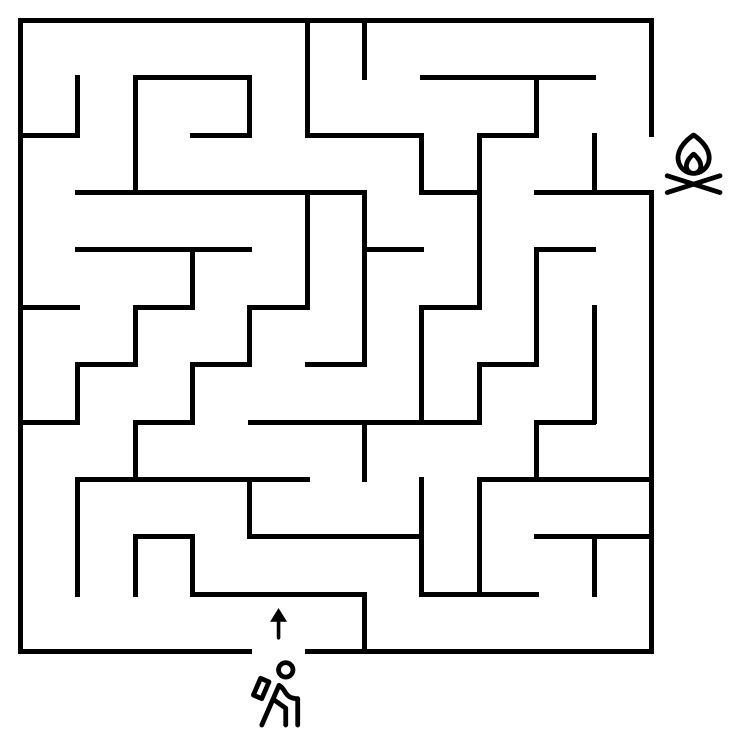
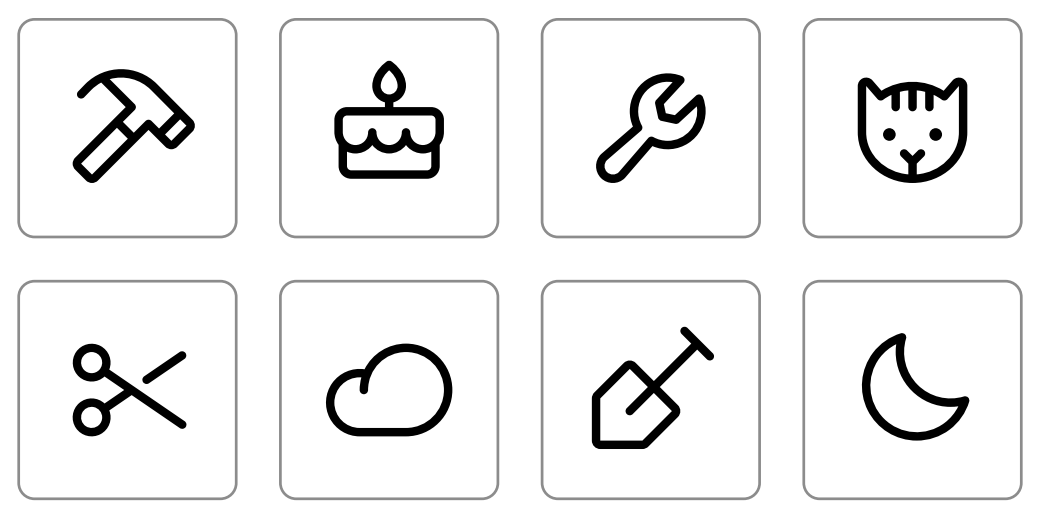
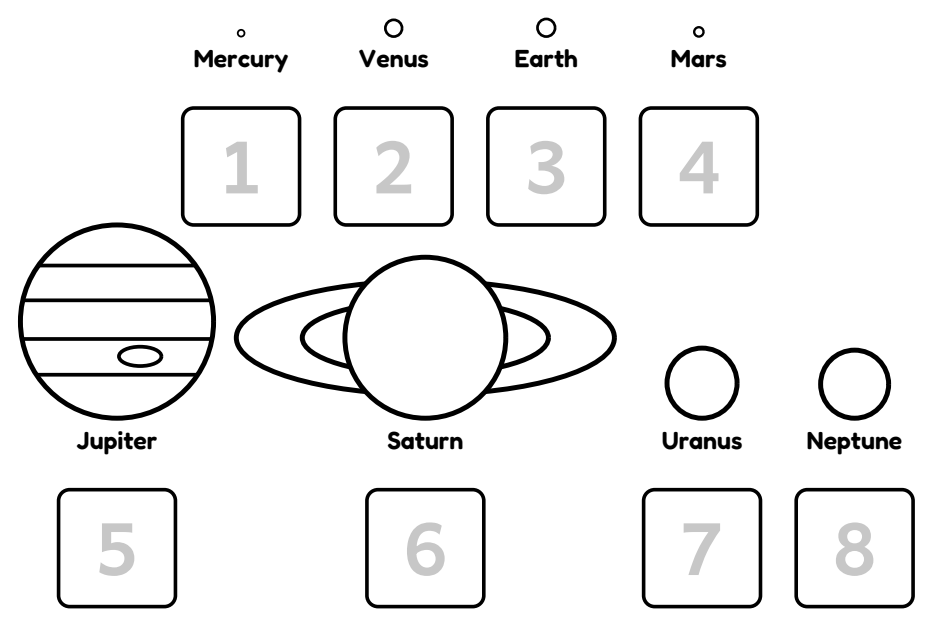
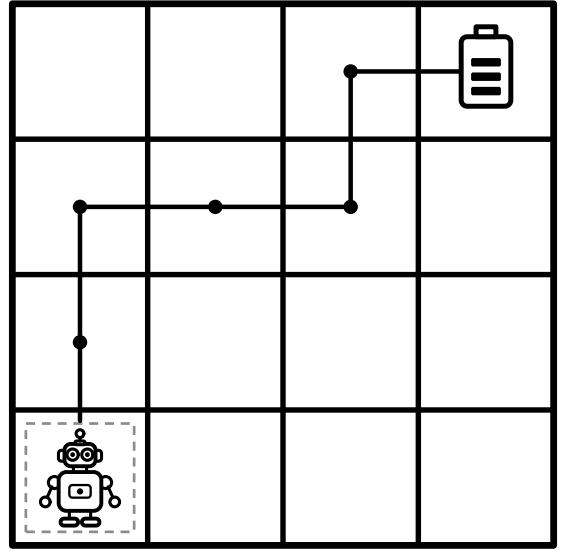
Four books for ages 3 to 6, 100 activities in each, and every one of them gets harder from the first page to the last. Most books in this category print one difficulty a hundred times, which is why a child finishes them in a week or stops on page three.
The name
Think like a scientist is an instruction, so the page has to carry it.
It is a claim about what a child does with the book, which means it has to show up in the layout rather than on the jacket. Four behaviors, one page at a time, in all four books.
A four-year-old is not doing science. They are practising the four things science is made of, on a page small enough to finish.
Notice
One task per page, and nothing on the page that is not the task. A child cannot look closely at something that is buried.
Try
The difficulty climbs one step at a time, so there is always a next thing worth attempting and nothing that arrives out of nowhere.
Check
Answers at the back, numbered and drawn at the size the child worked at, so they can check their own page without an adult reading it out.
Say why
The line for the grown-up suggests a question to ask instead of an answer to give. “Which way did you try first?” is the activity; the maze is only where it happens.
The series
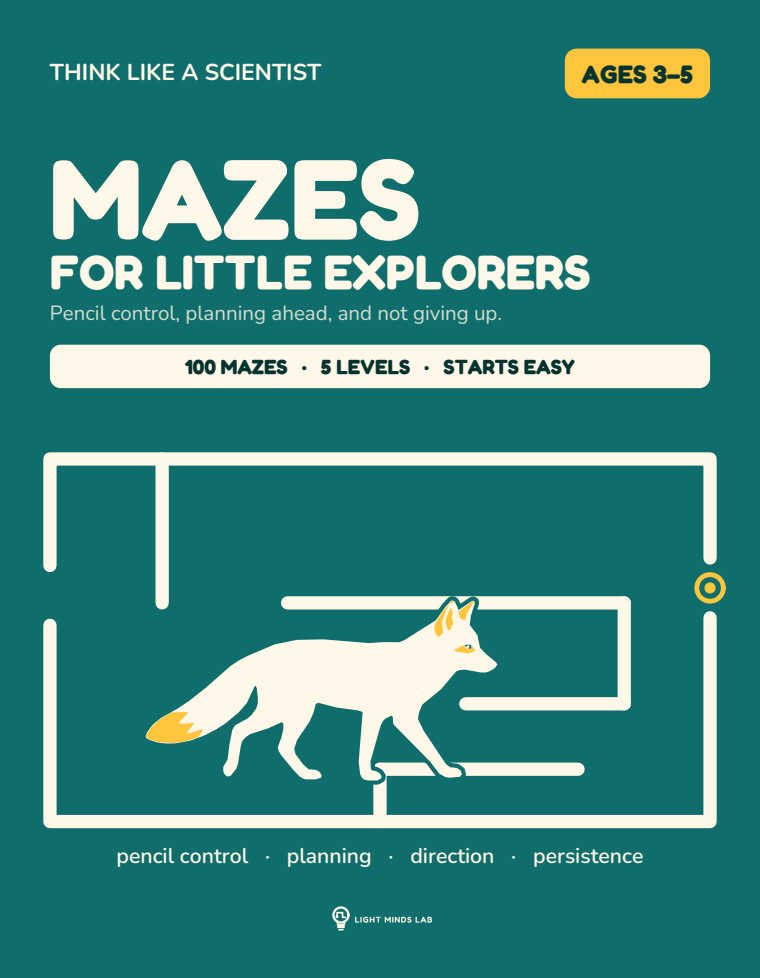 Book 1 · Ages 3–5
Mazes For Little Explorers
One maze per page, from a single wide channel a three-year-old can finish to an 11×11 grid with real dead ends.
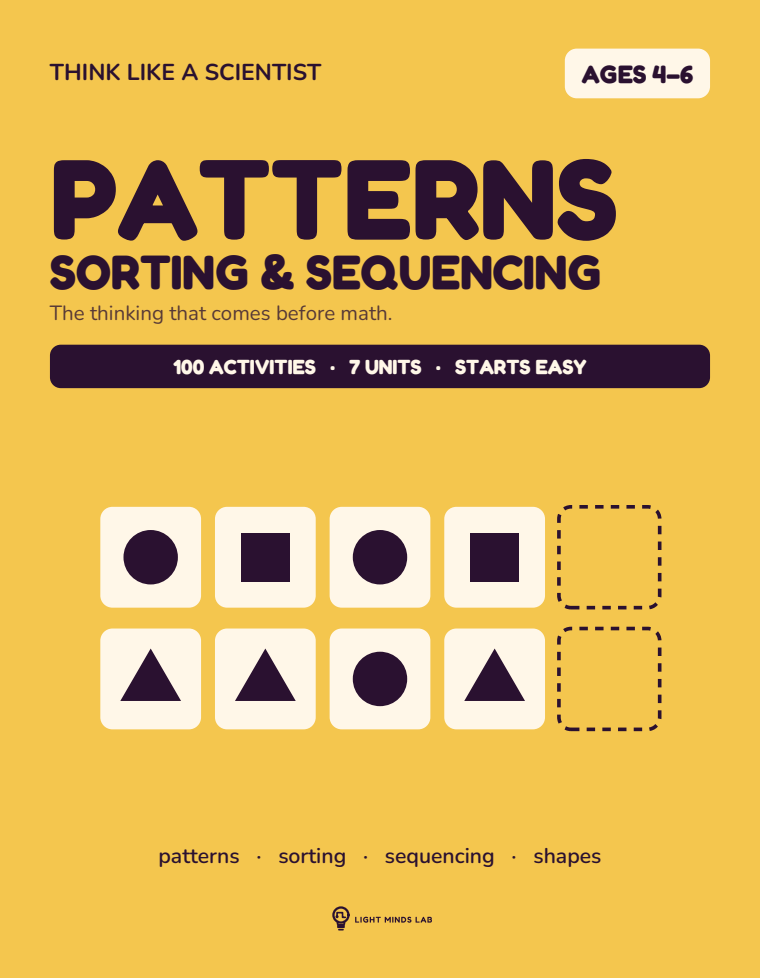 Book 2 · Ages 4–6
Patterns Sorting & Sequencing
Matching, sorting, seriation, and patterns from AB to growing. This is the thinking a child needs before arithmetic makes sense.
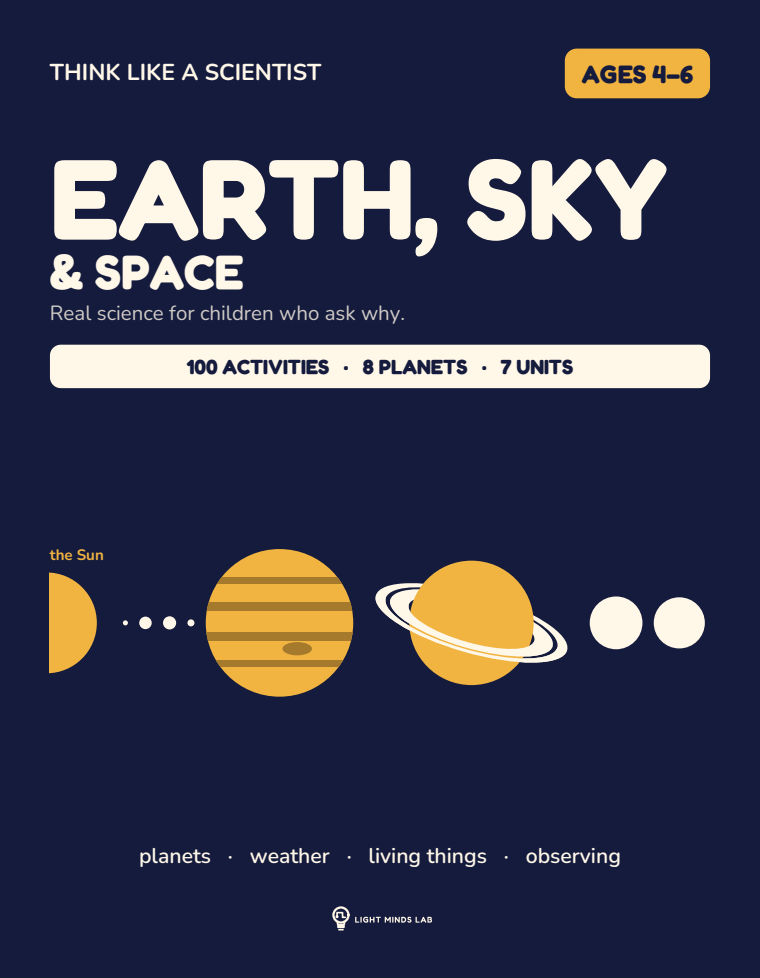 Book 3 · Ages 4–6
Earth, Sky & Space
Day and night, weather, land and water, living things, the moon and stars, and the eight planets, drawn accurately.
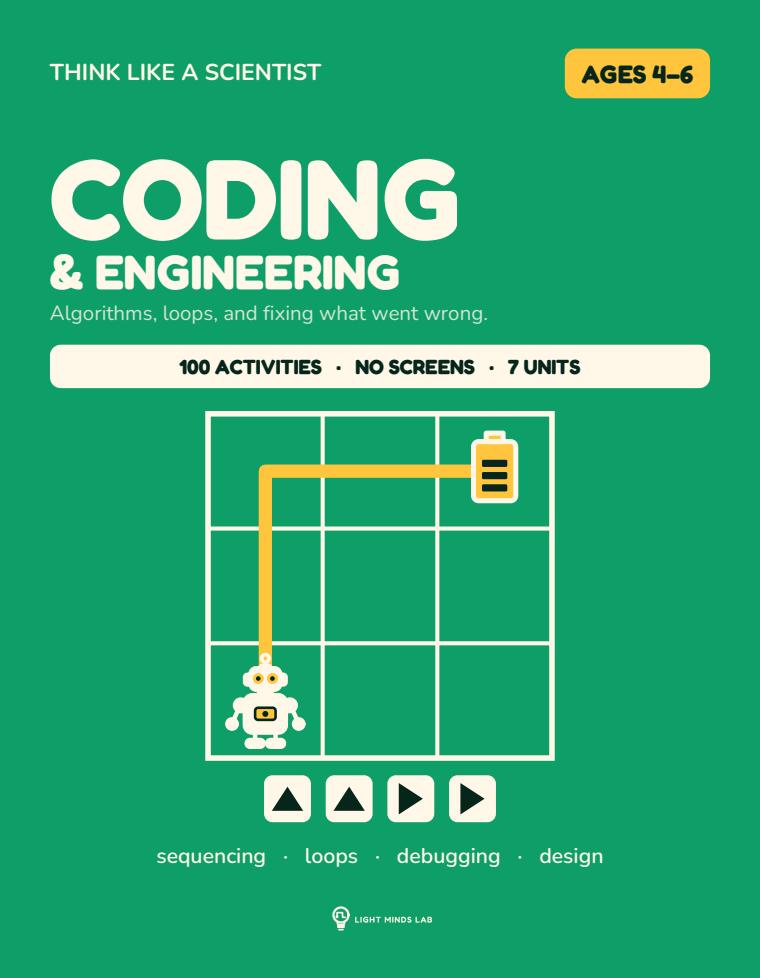 Book 4 · Ages 4–6
Coding & Engineering
Sequences, loops, conditionals and debugging, written in arrows on paper. No app, no tablet, no login.
Why these are different
Most preschool workbooks fail in the same four ways.
They put five illustration styles in one book. They write the instructions for an adult to read aloud. They jump in difficulty instead of climbing. And they crowd the page until a four-year-old closes the book.
We built these backwards from those four failures. We wrote the rules down before we drew anything: a style guide, a child ergonomics file, and an evidence base that grades every rule by how much research stands behind it.
If a rule is a craft convention rather than a research finding, we label it as one. That is why the words "scientifically designed" do not appear on our covers.
A real difficulty ramp
Maze 1 is a wide channel with no wrong turns. Maze 100 is an 11×11 grid, 121 cells, with 14 dead ends. Every step in between is on the page, in order, with published parameters.
One task per page
If a page needs two instructions it becomes two pages. A counting page never also asks for letter tracing.
A non-reader can start alone
Every instruction is an icon first. The sentence underneath is for the grown-up, and it suggests a question to ask rather than an answer to give.
The child checks their own work
Solutions at the back, numbered and sized so a child can compare them without an adult reading them out. The grown-up does not have to be the one who holds the answers.
What a page looks like
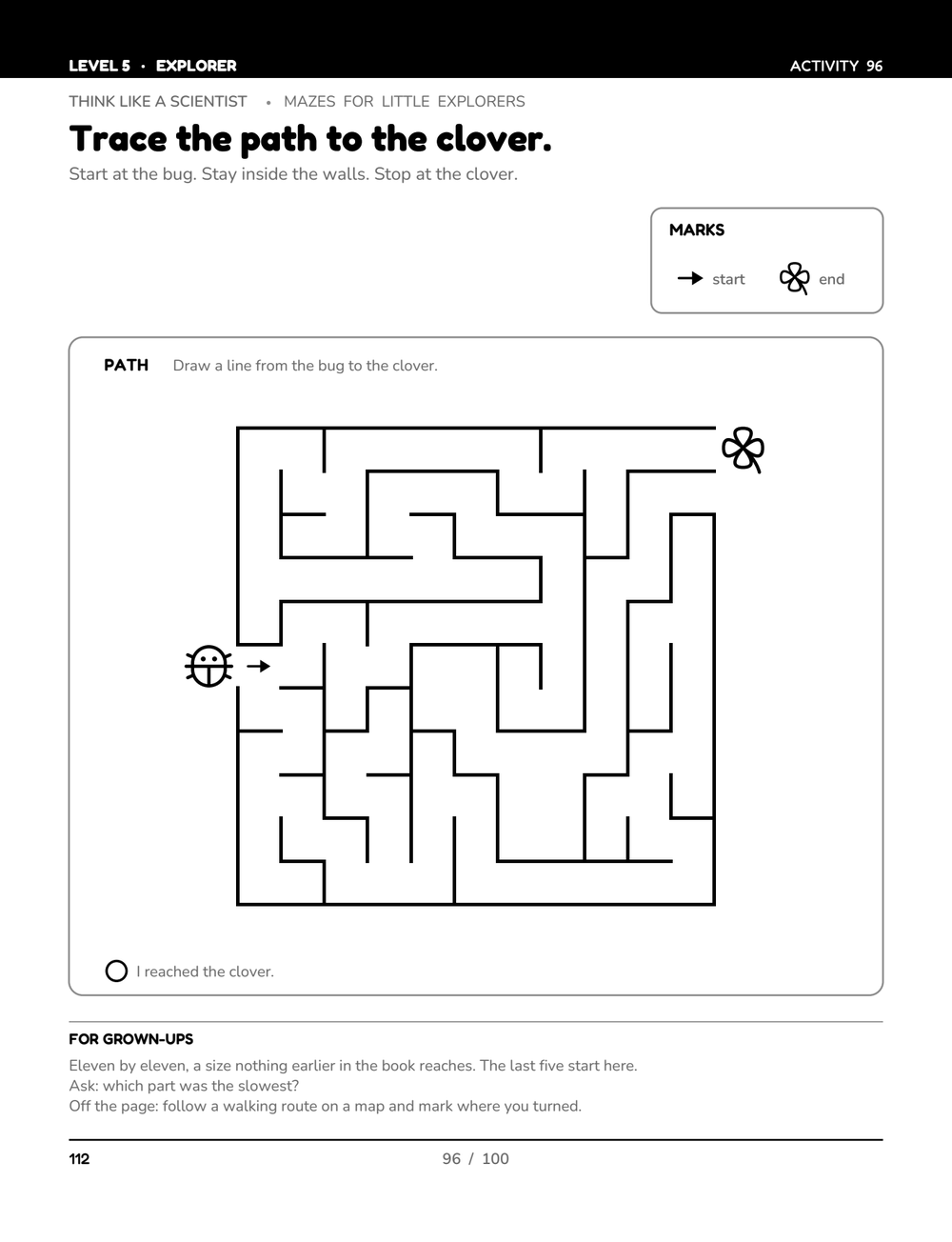
Page 112. Activity 96 of 100.
The band at the top says which level the child is in, so they can find their place without an adult. The instruction is four words. The key shows the two marks used on this page and nothing else.
The maze fills the page. Extraneous illustration measurably reduces a beginning reader's attention, so there is none.
At the bottom, three lines for the adult: what this page is for, a question to ask, and something to do away from the book.
The interior is black and white line art on cream paper, so every page is also a coloring page. The guide on that choice sets out the research behind it, including the one finding that argues against it.
Try before you buy anything
28 real pages, free, as printable PDFs.
Cut from the finished books, not made up for a lead magnet. No email address, no signup.
Free printable mazes for preschoolers
Eight printable mazes for ages 3–5, easiest first, one per sheet, from a single wide channel to real dead ends. PDF, no signup.
6 sheets · free PDFFree printable pattern worksheets
Six printable pattern and sorting worksheets for ages 4–6: AB, ABC, AABB and growing patterns. PDF, no signup.
7 sheets · free PDFFree printable space worksheets
Seven printable space and Earth science worksheets for ages 4–6: eight planets in order, moon phases, weather. NASA-accurate. No signup.
7 sheets · free PDFFree printable unplugged coding activities
Seven printable screen-free coding worksheets for ages 4–6: arrow codes, grids, loops and debugging. PDF, no signup.
Guides for grown-ups
Mazes by age: what a 3, 4, 5 and 6-year-old can do
A maze is three separate skills stacked on top of each other, and children pick them up years apart. Here is which maze belongs to which age.
Computational thinkingUnplugged coding for preschoolers: where to start
Four ideas underneath every programming language, none of which need a computer, and the order a four-year-old can meet them in.
Early mathAB, ABC, AABB: what preschool pattern work teaches
Most pattern worksheets stop at AB and stay there. The progression past it is where the mathematics is.
ScienceTeaching the solar system to a 4–6 year old, accurately
Young children can handle accurate astronomy. What they cannot undo easily is a misconception learned at five.