Think Like a Scientist
Book 1 of 4
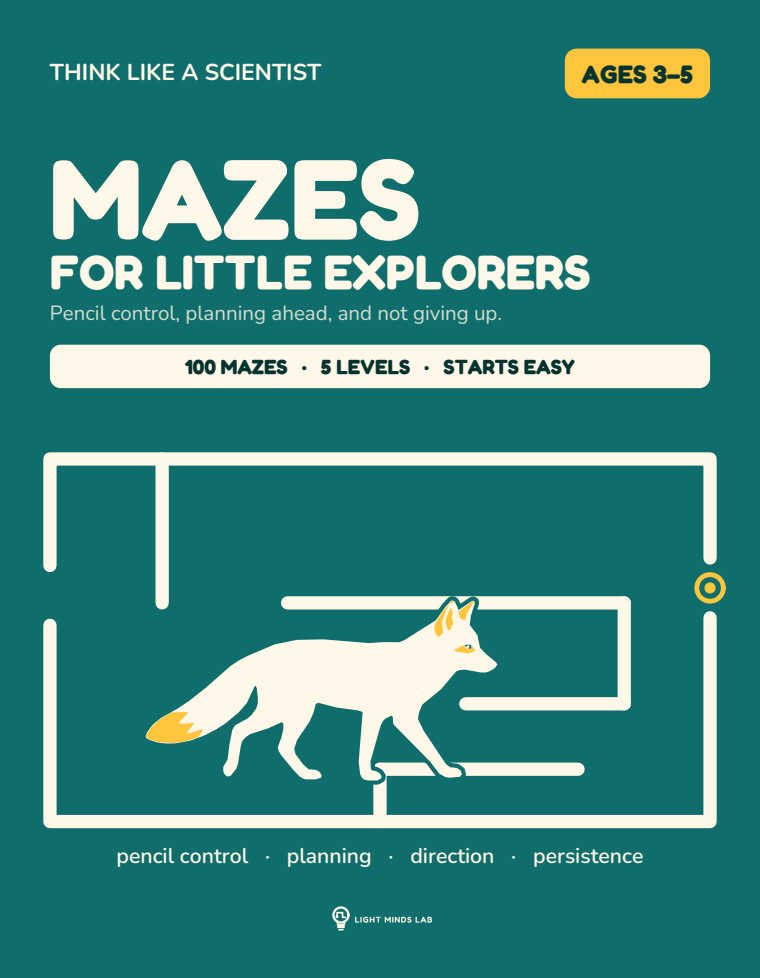
Mazes
For Little Explorers
Pencil control, planning ahead, and not giving up.
One maze per page, from a single wide channel a three-year-old can finish to an 11×11 grid with real dead ends.
128 pages · 8.5 × 11 in · paperback · black-and-white interior on cream paper · pencil control · planning · direction · persistence
Why it exists
Most maze books for this age hold one difficulty for all 100 pages. A child finishes every maze without effort, or stops on page three.
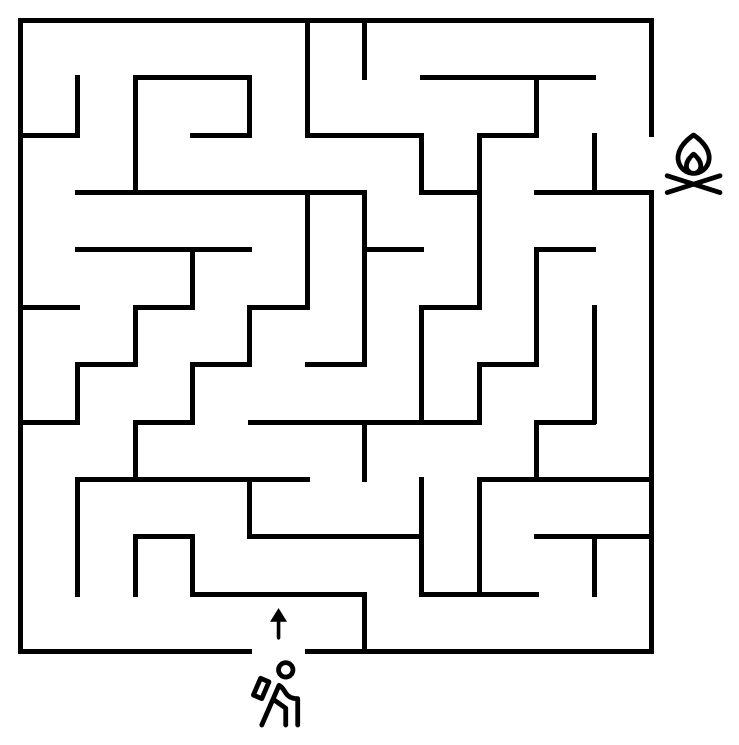
The difficulty climbs across this book. Maze 1 is a wide corridor with no branches. Maze 100 is an 11×11 grid, 121 cells, with no help in any of them. Every step in between is a page.
The corridor is 0.55 in wide at Level 1 and 0.28 in at Level 5, sized to the grasp a child has at each stage.
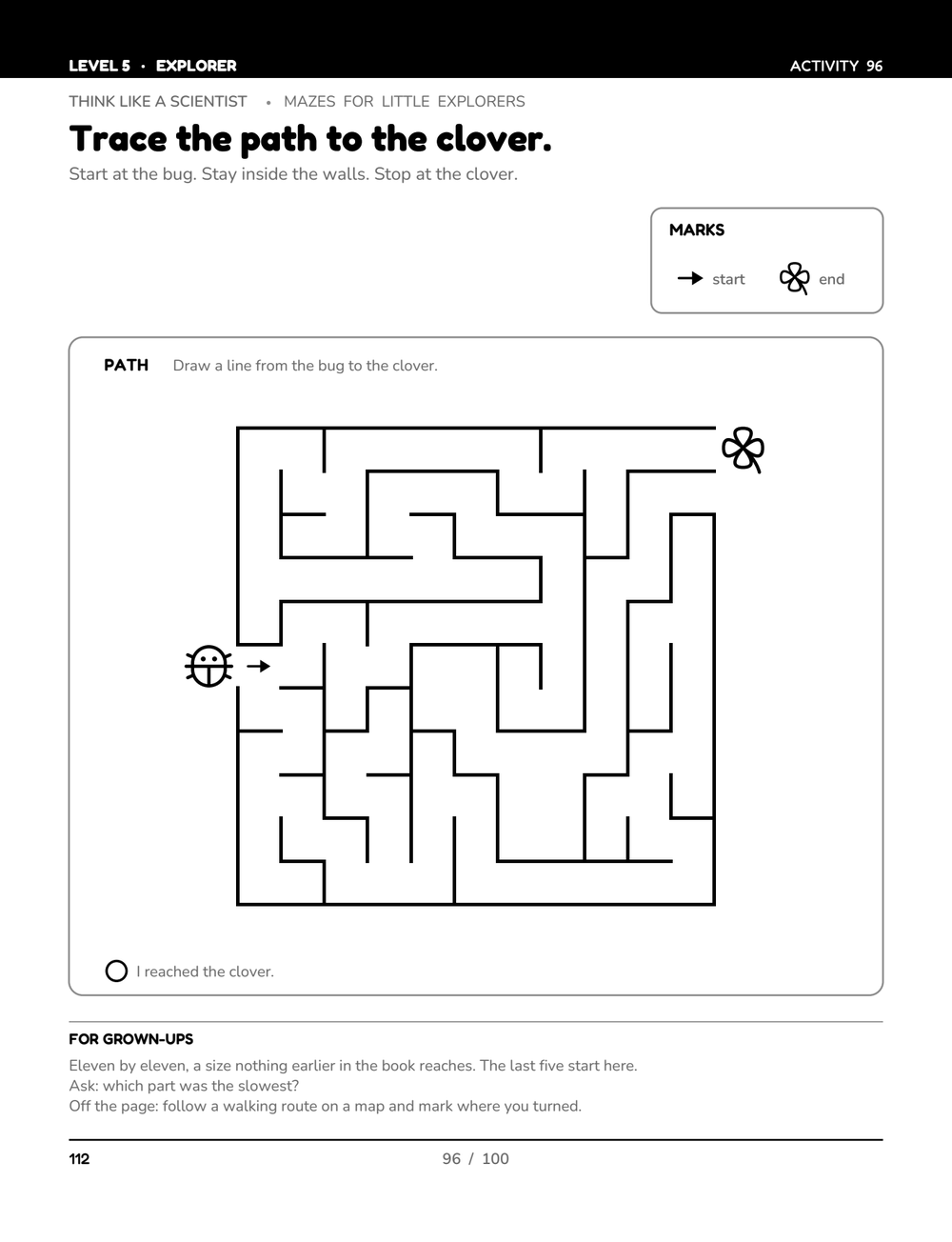
The ramp · 5 levels
What is in the book, in the order the child works through it.
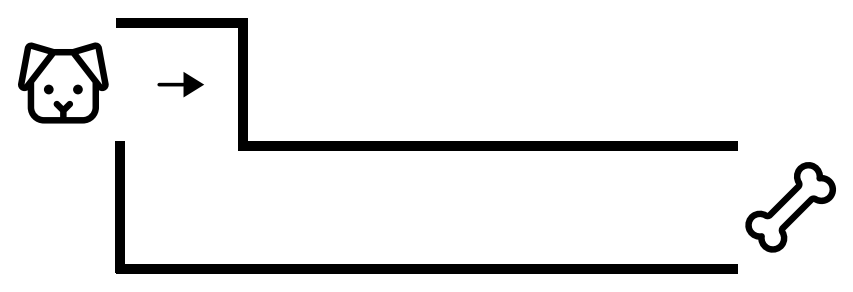
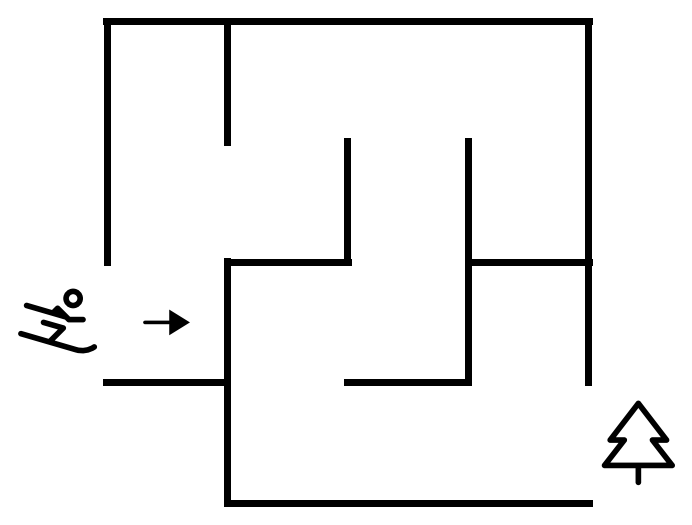
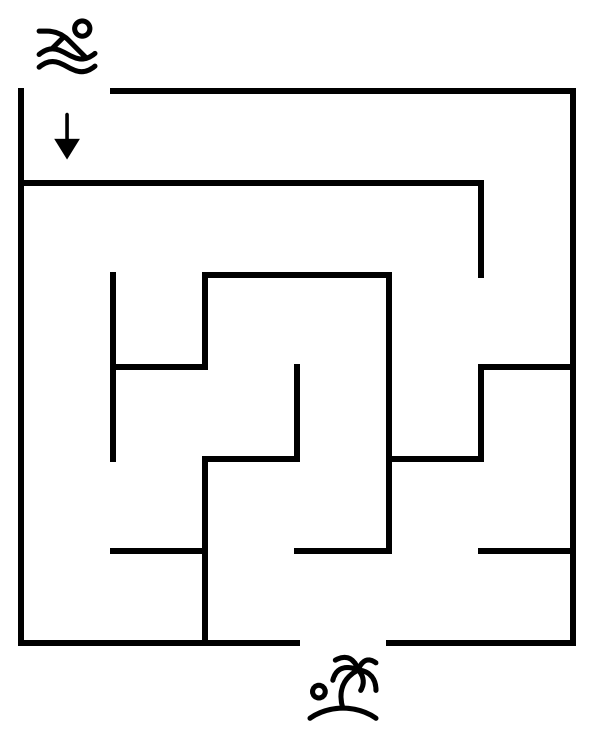
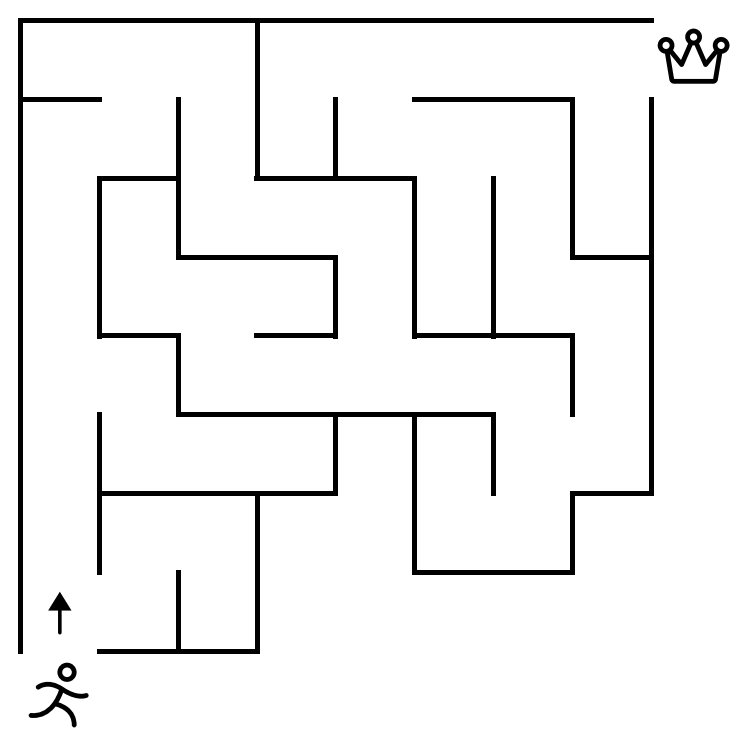
The grid is the page's own quarter inch, reduced with the art, so the row can be measured and not only compared.
Five real pages, cut from the printed interior by the build and reduced by the same amount. The channel narrows from 0.55 in to 0.28 in while the grid grows from ten cells to 121, and the 98 pages not shown here climb one step at a time between them.
Follow the Path
Activities 1–10A single wide channel, no branches, no dead ends. The line has one way to go, and the job is holding the pencil inside it.
First Turns
Activities 11–203×3 up to 5×4, with one dead end and one or two real choices. The first time a wrong turn is possible.
Choices
Activities 21–404×4 to 5×5. Themed outlines start here. The maze is drawn inside a leaf, a rocket, or a fish.
Dead Ends
Activities 41–656×6 to 7×7. These mazes need backtracking. The child has to notice they are stuck and go back.
Explorer
Activities 66–1008×8 to 11×11, ending at 121 cells. These have the longest solution paths in the book and the most dead ends.
Questions
Can a three-year-old really do these?
Yes, at Level 1. Those ten mazes are a single wide channel with no wrong turns, which is a tracing task, not a puzzle. Level 2 adds one dead end per maze, which is the first real choice, and the book is built so a child can stop there and come back to it.
Is there an answer key?
Yes. Thumbnail solutions at the back, numbered to match, sized so the child can check their own work without an adult reading it to them.
Is it color inside?
No. The interior is black and white line art on cream paper, so every page is also a coloring page. The cover is the only color. The guide on black-and-white interiors gives the research.
One-sided pages?
No. We print both sides. With a pencil or crayon there is no bleed-through. If you want to reuse a page, photocopy it.
Guides for this book
Mazes by age: what a 3, 4, 5 and 6-year-old can do
A maze is three separate skills stacked on top of each other, and children pick them up years apart. Here is which maze belongs to which age.
Fine motorPencil grasp by age, and what helps
Grasp develops on its own schedule. What you can change is what the hand gets to practice, and the size of what you ask it to do.
For grown-upsHow to sit beside a child doing a worksheet
The most challenging part of an activity book is not on the page. It is sitting there while a four-year-old gets it wrong.
How we make themWhy our activity books are printed in black and white
The research behind it, the one finding that argues against it, and what the child gets in return.