Free printable mazes for preschoolers
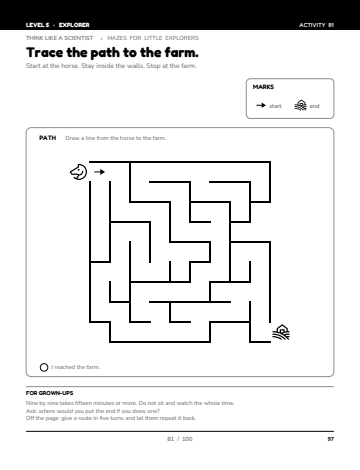
Eight mazes, easiest first, printed one per page. The first two are a single wide channel with no wrong turns, so a three-year-old can finish them. The last two need real backtracking. Print the whole set and let the child find where they stop.
US Letter · 8 pages · black and white · no signup
What is on the sheets
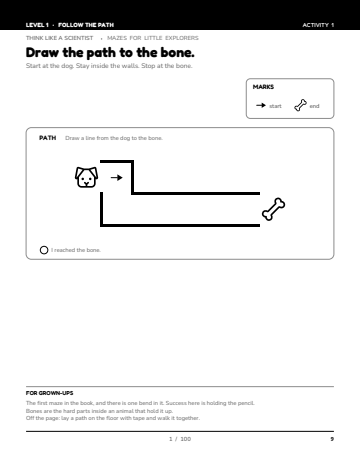
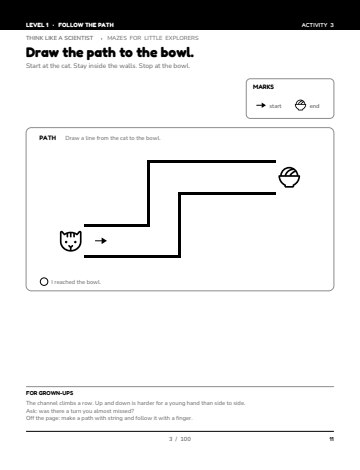
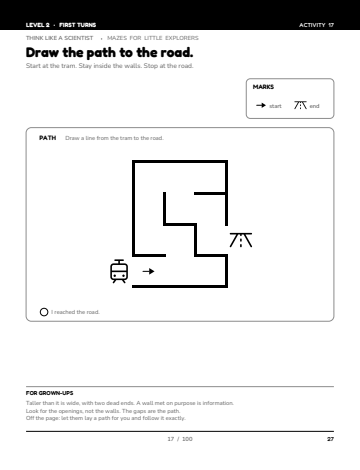
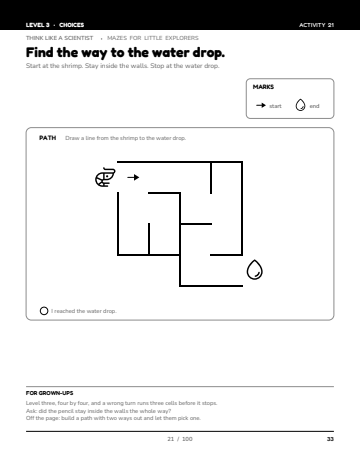
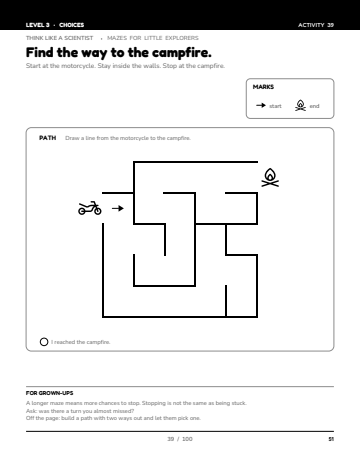
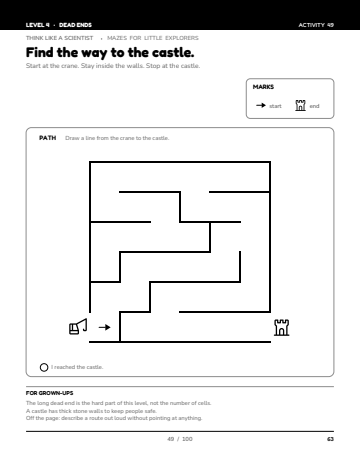
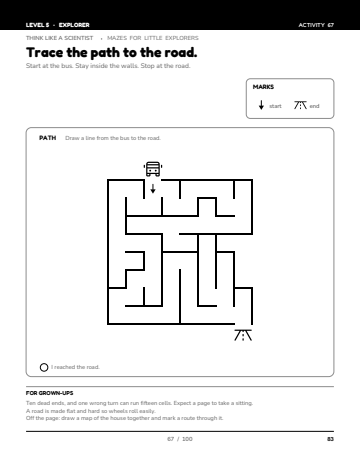
Print at actual size (100%), not "fit to page". The target sizes on these pages are chosen for a particular age of hand, and scaling shrinks them.
Using them well
Start easier than you think
If the child traces the first maze without hesitating, the level is right for practice but too easy to be interesting. Move up one.
Do not correct the wrong turn
Watch them hit a dead end and say nothing. Noticing you are stuck and going back is the skill the maze teaches.
A crayon beats a pencil at three
A fat crayon suits the whole-arm grasp a three-year-old draws with. Pencils come later.
Guides that go with these
Mazes by age: what a 3, 4, 5 and 6-year-old can do
A maze is three separate skills stacked on top of each other, and children pick them up years apart. Here is which maze belongs to which age.
Fine motorPencil grasp by age, and what helps
Grasp develops on its own schedule. What you can change is what the hand gets to practice, and the size of what you ask it to do.
For grown-upsHow to sit beside a child doing a worksheet
The most challenging part of an activity book is not on the page. It is sitting there while a four-year-old gets it wrong.
How we make themWhy our activity books are printed in black and white
The research behind it, the one finding that argues against it, and what the child gets in return.
Where these came from
These are 8 pages out of 100.
One maze per page, from a single wide channel a three-year-old can finish to an 11×11 grid with real dead ends. The difficulty climbs across this book. Maze 1 is a wide corridor with no branches. Maze 100 is an 11×11 grid, 121 cells, with no help in any of them. Every step in between is a page.