Think Like a Scientist
Book 2 of 4
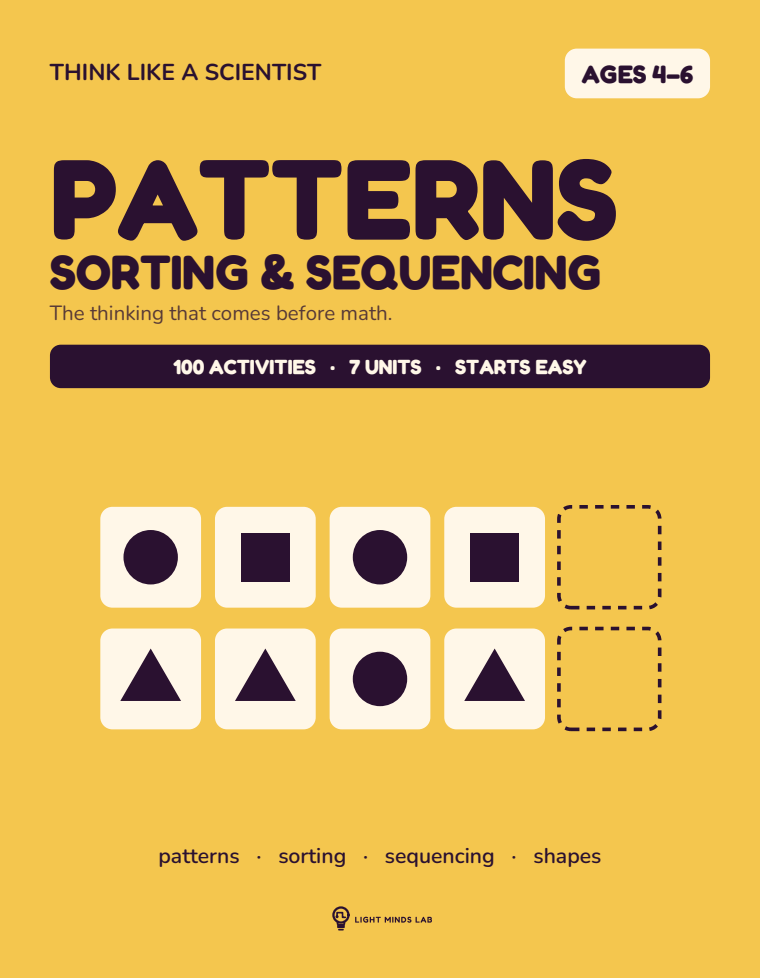
Patterns
Sorting & Sequencing
The thinking that comes before math.
Matching, sorting, seriation, and patterns from AB to growing. This is the thinking a child needs before arithmetic makes sense.
120 pages · 8.5 × 11 in · paperback · black-and-white interior on cream paper · patterns · sorting · sequencing · shapes
Why it exists
Pattern worksheets usually stop at AB, AB, AB. That is one week of work sold as a book, and it skips the part of pattern work that feeds arithmetic.
Seven units, each opening at its own easiest version: same and different, sorting by one rule then two, ordering by size, AB through AABB and growing patterns, sequencing events, shape and position, then challenges that combine them.
Every counting set, graph and pattern strip uses plain uniform shapes. Decorated shapes measurably hurt children on this kind of task.
The ramp · 7 units
What is in the book, in the order the child works through it.
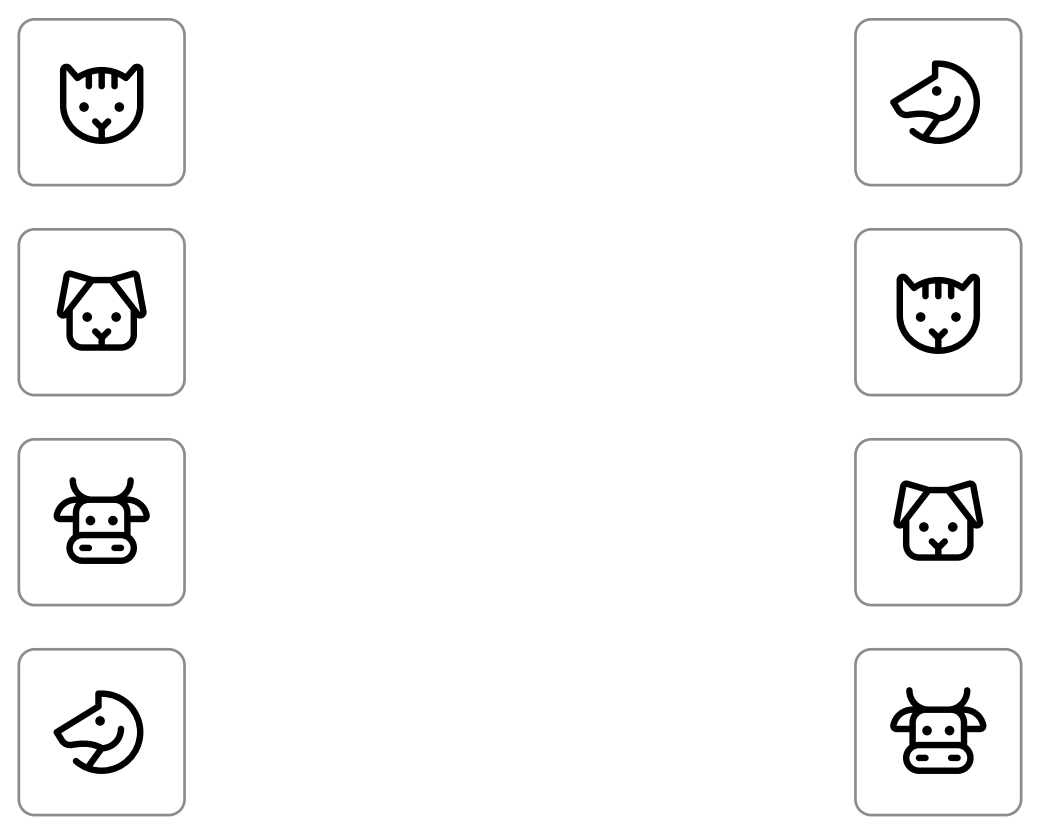
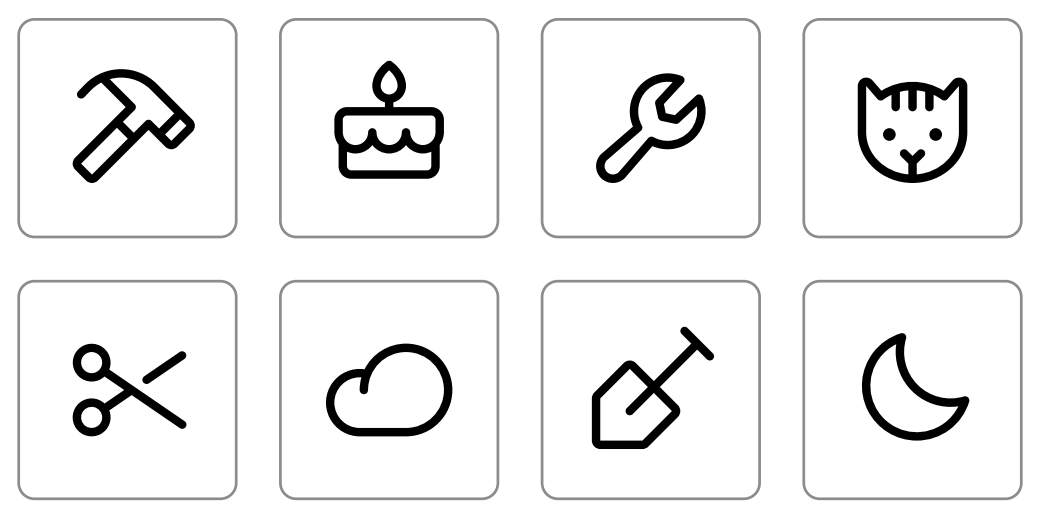
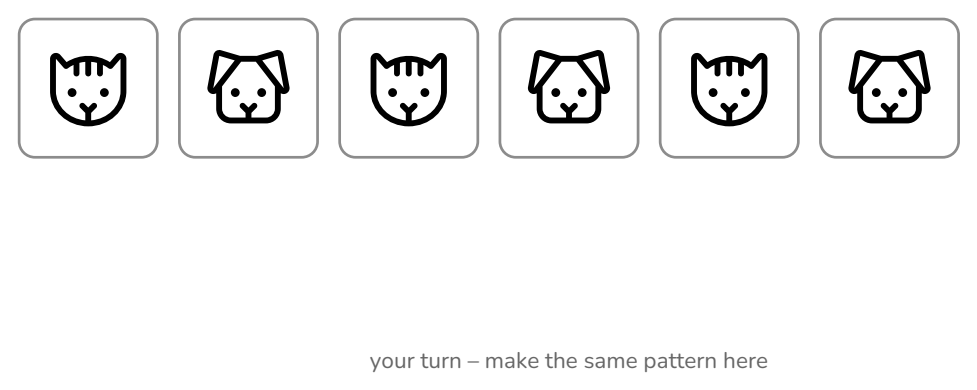
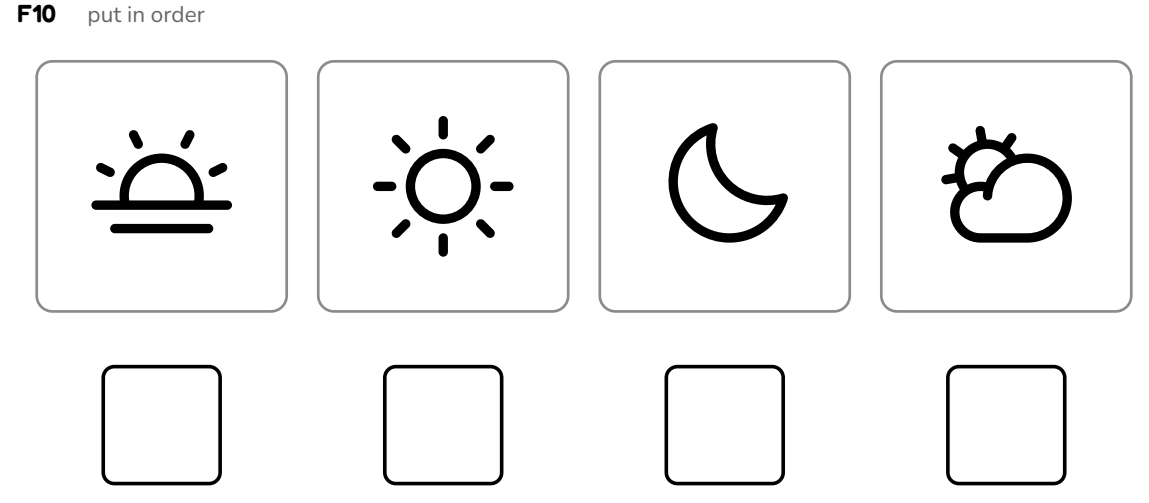
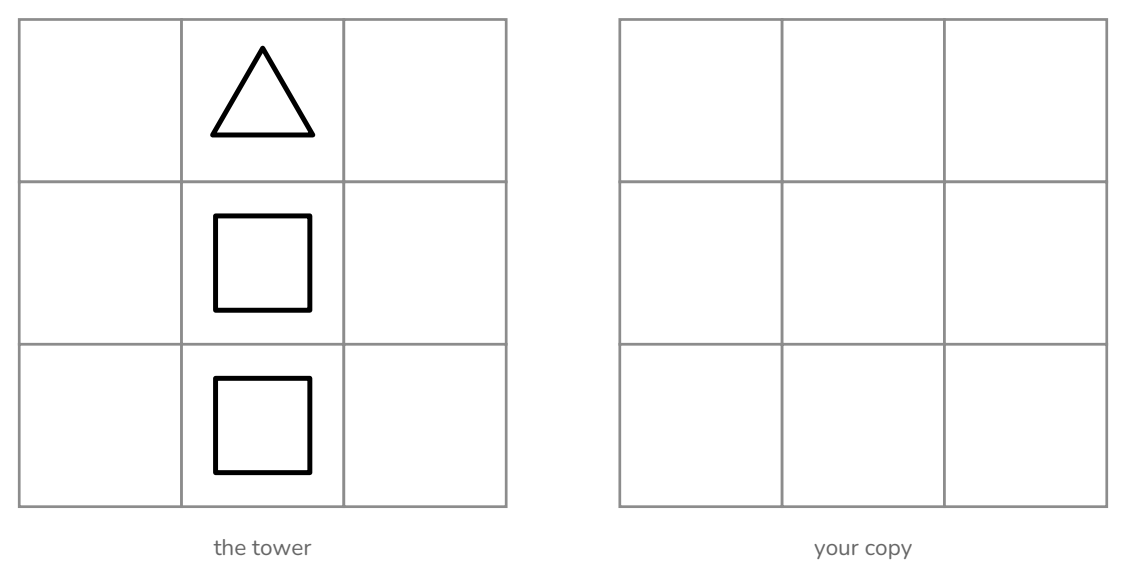
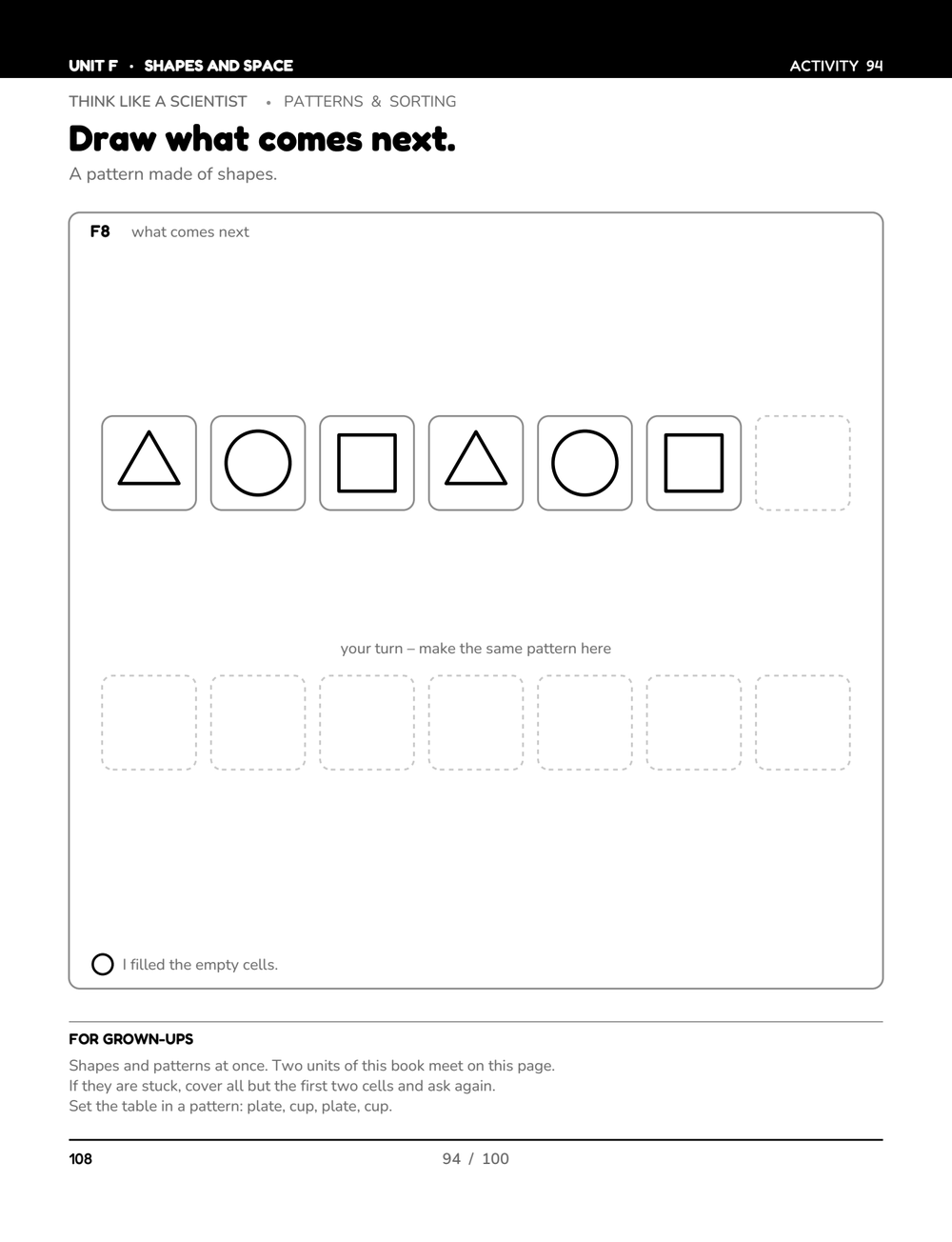
The grid is the page's own quarter inch, reduced with the art, so the row can be measured and not only compared.
Five real pages, cut from the printed interior by the build and reduced by the same amount. One line drawn between two matching animals on the first page; a three-block tower copied square by square into an empty grid by activity 96. The strip stops there because the last unit, Scientist Challenges, is open-ended work with nothing printed to check against.
Same and Different
Activities 1–16Matching, odd-one-out, first classification. What makes two things the same thing.
Sorting Rules
Activities 17–32Sort by one attribute, then by two attributes at once.
Smallest to Biggest
Activities 33–48Seriation, measurement, comparison. Ordering a set rather than picking from it.
What Comes Next?
Activities 49–68Repeating patterns: AB, then ABC, then AABB, then growing patterns that add a step each time.
First, Next, Last
Activities 69–84Sequencing events, life cycles, and processes. The order runs in time rather than along a row.
Shapes and Space
Activities 85–962-D and 3-D shapes, position words, symmetry.
Scientist Challenges
Activities 97–100Cumulative, multi-step pages that use every unit before them.
Questions
Is this a math book?
It is what comes before one. Sorting, seriation, and patterning are the algebraic-thinking strand of early math, the structure that makes addition make sense later. There are no sums in it.
What if my child already knows AB patterns?
Start at Unit D and go forward, or at Unit B. The units are self-contained; nothing in the book requires the page before it.
Does it align to anything?
The activities were written against Head Start ELOF and Common Core Kindergarten math. The tags are in our notes, not printed on the child's page.
Guides for this book
AB, ABC, AABB: what preschool pattern work teaches
Most pattern worksheets stop at AB and stay there. The progression past it is where the mathematics is.
For grown-upsHow to sit beside a child doing a worksheet
The most challenging part of an activity book is not on the page. It is sitting there while a four-year-old gets it wrong.
How we make themWhy our activity books are printed in black and white
The research behind it, the one finding that argues against it, and what the child gets in return.