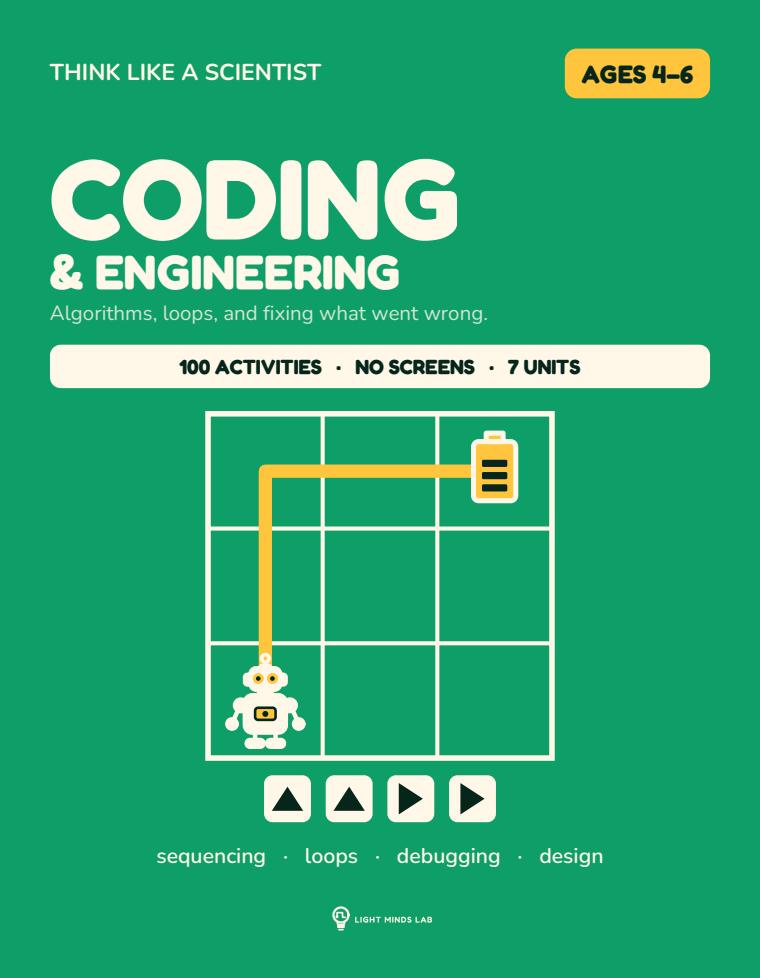
Free printable unplugged coding activities
Seven sheets that teach sequence, loop, condition and debugging with arrows on a grid. The symbol key prints first. It is the only thing a child needs to read before starting, and the same six symbols appear on every sheet after it.
US Letter · 7 pages · black and white · no signup
What is on the sheets
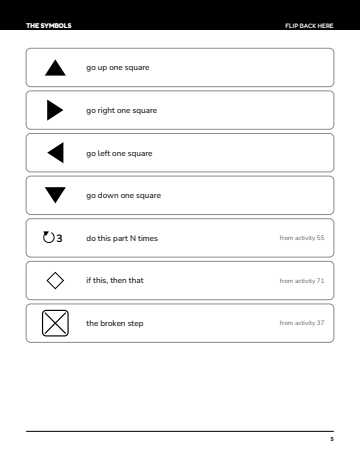
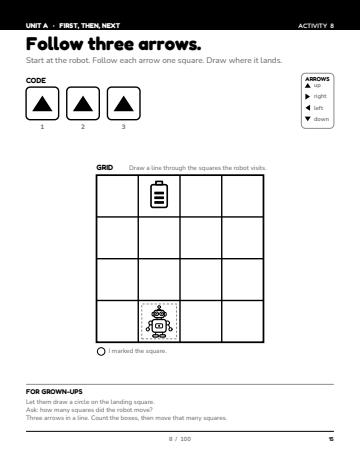
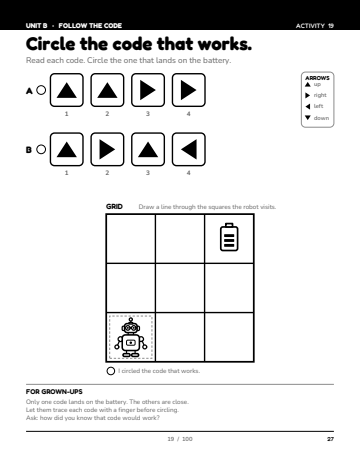
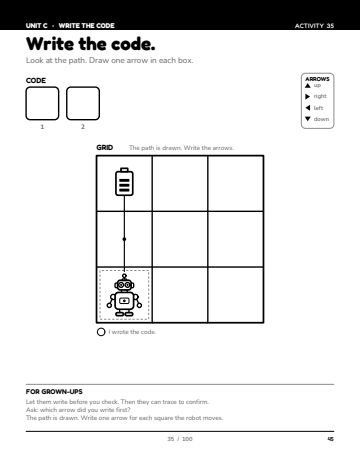
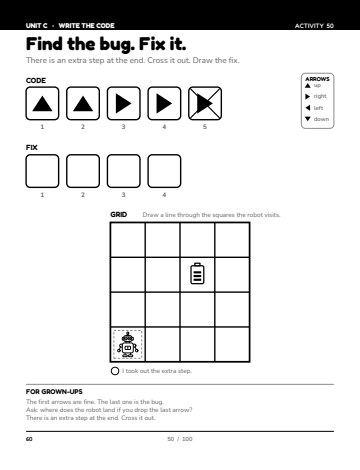
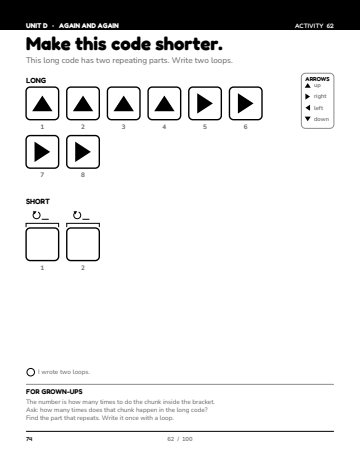
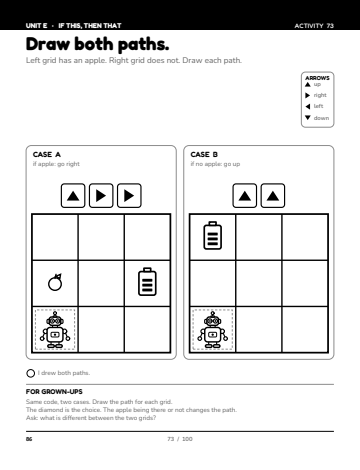
Print at actual size (100%), not "fit to page". The target sizes on these pages are chosen for a particular age of hand, and scaling shrinks them.
Using them well
Be the robot
The child reads their code aloud and you walk it, exactly, including the wrong step. This is the most useful thing you can do with these sheets.
Let the bug stay in
The debugging pages are the point. A wrong code the child finds is worth ten that were right first time.
Arrows before words
Do not translate the arrows into sentences. Reading the notation is the skill.
Guides that go with these
Unplugged coding for preschoolers: where to start
Four ideas underneath every programming language, none of which need a computer, and the order a four-year-old can meet them in.
For grown-upsHow to sit beside a child doing a worksheet
The most challenging part of an activity book is not on the page. It is sitting there while a four-year-old gets it wrong.
How we make themWhy our activity books are printed in black and white
The research behind it, the one finding that argues against it, and what the child gets in return.
Where these came from
These are 7 pages out of 100.
Sequences, loops, conditionals and debugging, written in arrows on paper. No app, no tablet, no login. A locked symbol set of arrows and a grid. The child reads a code and traces it, then writes a code of their own, then shortens it with a loop, then finds the one wrong step in a code that does not work.